info@thebluemediaagency.com +92 300 1234567 Lahore, Pakistan
Follow Us:
A-FORWARD
Get a Free Quote

+92 300 1234567

info@thebluemediaagency.com

Seamless Interoperability

Eliminate Data Silos & Automate Enterprise Workflows

Modern businesses rely on dozens of specialized platforms—from legacy ERPs and CRMs to cloud databases and IoT sensors. A-FORWARD designs practical integration layers that help approved hardware, software, and data sources exchange information more reliably.

Our team can design APIs, middleware connectors, database synchronization workflows, and automation pipelines based on your operational needs and technical environment.

Network & Server Integration
REST API & Middleware
Database Synchronization
Workflow Automation
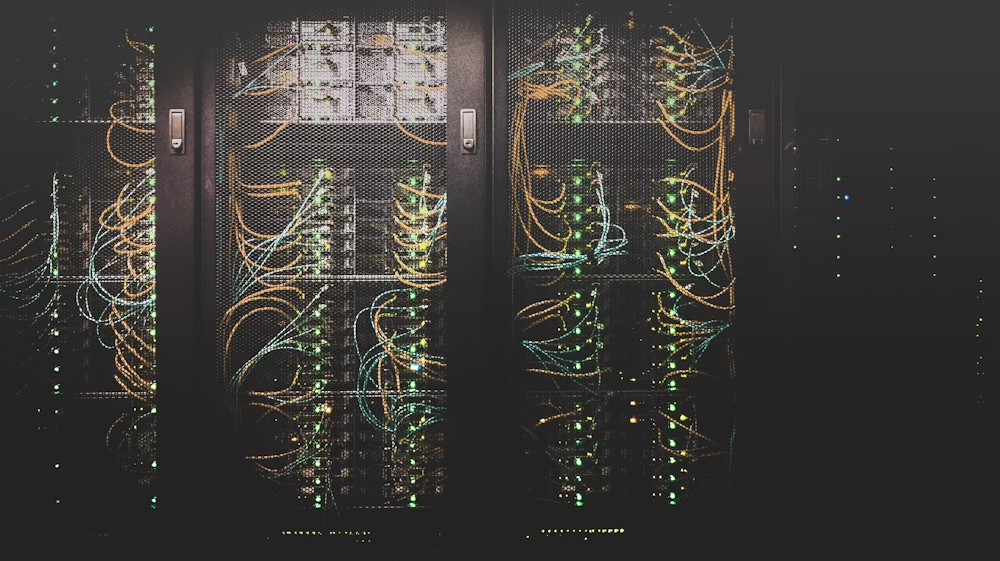
System Integration Network Diagram and Enterprise Servers
Common Integration Challenges

Turn Disconnected Systems Into One Reliable Workflow

Disconnected applications can create duplicate data, manual re-entry, delayed reporting, and fragmented customer experiences. We design integration approaches that help your systems exchange the right information at the right time.

Data Silos

Connect information spread across sales, finance, operations, support, and field systems.

Manual Data Entry

Reduce repeated copying between tools with structured workflows and controlled automation.

Disconnected Customer Journeys

Help CRM, support, billing, and communications tools work together more smoothly.

Legacy System Limitations

Extend older systems using modern interfaces, services, and carefully planned connectors.

Delayed Reporting

Bring operational data together to support clearer reporting and faster decisions.

Scaling Complexity

Build flexible integration foundations that can adapt as teams, tools, and processes grow.

Key Capabilities

Integration Features

API Development & Connectors

Custom API endpoints connecting third-party platforms with internal databases, payment gateways, and inventory systems.

Real-Time Data Migration

Structured data synchronization and migration planning across compatible databases and cloud data environments.

Legacy Modernization

Modernize selected legacy workflows through practical interfaces, connectors, and web-based tools while planning carefully around business continuity.

Connected Technology Environment

What We Help You Integrate

Every organization uses a different mix of applications, infrastructure, and business processes. Our team assesses compatibility and designs practical integration paths around your existing environment.

Architecture Overview
A-FORWARD Integration Layer
Unified API & Middleware Hub
CRM
ERP
E-Commerce
Mobile Apps
Databases
Cloud Services
Payments
IoT & Devices
CCTV & Access

CRM, ERP, HR, accounting, inventory, procurement, and project-management tools.

Websites, e-commerce systems, customer portals, booking systems, and mobile applications.

SQL databases, cloud data sources, dashboards, reporting pipelines, and data migration workflows.

Network systems, servers, storage, IoT devices, surveillance platforms, access-control systems, and attendance devices.

Payment gateways, messaging tools, email systems, maps, shipping platforms, and other approved APIs.
Flexible Integration Services

Choose The Integration Support That Fits Your Operations

01

API & Middleware Development

Create secure interfaces and middleware that enable controlled communication between approved applications and services.

02

Database & Data Synchronization

Plan data mapping, structured synchronization, validation rules, and migration workflows across relevant databases.

03

Business Workflow Automation

Connect trigger-based processes, notifications, approvals, lead flows, reporting tasks, and operational handoffs.

04

Legacy System Modernization

Expose older business systems through practical interfaces while preserving essential processes and minimizing disruption.

Integration Roadmap

Discover → Plan → Deploy → Support

1
Discover

Mapping out existing data schemas, endpoints, server nodes, and security protocols.

2
Plan

Designing API specs, data transform rules, and failover redundancy mechanisms.

3
Deploy

Staging sandbox testing followed by carefully planned production deployment designed to minimize operational disruption.

4
Support

Monitoring and support options aligned with the agreed service scope, log auditing, and throughput optimization.

Business Value

Why Connected Systems Matter

Connected Enterprise

Better Information Flow. Stronger Business Decisions.

Connecting operational tools provides teams with timely, accurate data where they need it most. By removing barriers between software platforms, organizations reduce duplication and maintain clearer visibility across processes.

Clearer Operational Visibility

Bring relevant information closer together so teams can monitor activity with less manual effort.

Reduced Repetitive Work

Automate selected handoffs and data movement to reduce duplication and help teams focus on higher-value work.

Improved Data Consistency

Apply mapping, validation, and controlled data-flow rules to reduce mismatches across connected systems.

Scalable Foundation

Create integration patterns that can be extended as your company adds users, services, locations, or platforms.

* Actual outcomes depend on existing systems, project scope, data quality, and operational adoption.

Designed With Control In Mind

Secure, Manageable & Documented Integration Delivery

System integration should improve connectivity without compromising control. We incorporate practical safeguards based on the selected architecture and agreed project requirements.

Access Control

Role-aware access planning and controlled credentials for approved systems and integration endpoints.

Data Protection

Careful handling of sensitive data, secure transport options, and backup considerations where applicable.

Monitoring & Errors

Logging, error alerts, retry logic, and review processes appropriate to the integration scope.

Documentation

Clear records of workflows, data mapping, configurations, and maintenance considerations.

System Integration FAQs

Questions Businesses Ask Before Connecting Their Systems

Yes. After reviewing available APIs, data access, security requirements, and business workflows, we can recommend an integration approach for connecting compatible systems.

Not always. In many cases, existing systems can be extended through APIs, middleware, controlled exports, or custom connectors. We assess the practical options during discovery.

Where technically suitable, we can plan data mapping and synchronization between different database environments. The approach depends on data structure, access permissions, volume, and update frequency.

We plan testing, staging, rollout, and fallback considerations to reduce disruption. The exact deployment approach depends on your systems and operational requirements.

Yes. Support, maintenance, monitoring, enhancements, and documentation handover can be included based on the agreed service scope.

Contact A-FORWARD for an initial consultation. We will discuss your current tools, workflow challenges, priorities, and a suitable next step.
Explore Related Solutions

Build A More Connected Technology Environment

Cloud Infrastructure

Build cloud-ready environments with backup, migration, virtualization, and continuity planning.

Learn More

Corporate Services

Align your technology decisions with business priorities, support requirements, and growth plans.

Learn More

Web Development

Develop secure, scalable websites and business applications that can connect with your core tools.

Learn More

Ready To Connect Your Business Systems?

Tell us about the tools, data, and workflows you need to connect. Our team will help you identify a practical integration path.

Initial discussions are focused on understanding your requirements and next steps.